Showing posts with label african american. Show all posts

Monday, March 14, 2011

Nonfiction Monday Review: Sugar Changed the World by Marc Aronson and Marina Budhos

Wow, this book has been getting a ton of praise recently - including making the shortlist for the LA Times Book Prize in the YA lit category. So I knew I had to check it out.

Sugar Changed the World: A Story of Magic, Spice, Slavery, Freedom, and ScienceMarc Aronson and Maina Budhos both have family connections to the sugar trade - Aronson's family worked with beet sugar in Russia, while Budhos' family, originally from India, worked in Guyana. This personal connection is an early indication that the story of sugar is going to take us around the globe. Aronson and Budhos trace sugar from its probably origins in New Guinea, through the Middle East to Europe, and then spend the bulk of the book looking at how sugar drove the slave trade in South America and the Caribbean. As a USian, for whom the story of slavery was tied to cotton, it was eye opening to see how slavery influenced a different cash crop.

There are also interesting facts about sugar peppered throughout the book. Sugar is the only flavor humans like naturally - we acquire our tastes for salty, bitter, and other flavors. While the story Aronson and Budhos share pretty much ends with slavery in the US (going on just a bit longer to look at the indentured servitude of Indians, as well as the Asians of many countries who were brought in to Hawaii), there are tantalizing hints that the story of sugar isn't over - we've developed high fructose corn syrup as a replacement for cane sugar, and artificial sweeteners like Splenda. I think, rather than spending so much time going over the horrors of slavery again, I would have liked to see more about the modern quest for cheap sweeteners. While slavery is certainly an important part of the story of sugar, since Aronson and Budhos say in their afterword that this is a book intended for high school students I feel like rehashing a lot of the stories of slavery that aren't too different from accounts of life in the United States, with which US students will already be familiar, dragged down parts of the book.

Another small thing that I feel is missing from the book is any account of the Caribbean natives who would have been displaced by these sugar plantations. The way the book is now, it seems like the islands were discovered as empty, pristine places, perfect for growing sugar cane. I know initially native populations were used as slaves for the Europeans - by the time the Europeans got around to growing sugar, had the native populations already been exhausted by other slave work and disease? I certainly don't know - the only mention of natives doesn't even merit a listing in the index, as they are just briefly mentioned as members of the maroon population in Brazil - communities formed outside of the plantations by escaped slaves, natives, and even some white Europeans.

There were also two small passages that dragged down the quality of the book for me, because they are phrased...awkwardly, to put them in the most positive light possible.

First, on page 39:
You might be lucky enough to be trained as a specialist - the person who watched the cane grow and who kept an eye out for when the plants were ripe and ready to be cut. Special knowledge did not make a slave any less a slave - you were neither freed or paid. But perhaps some of the enslaved people had the personal pleasure of realizing that they had knowledge that the plantation owners needed.
I checked to see if there was a note in the back explaining where this notion of pleasure in slavery came from - if there was a slave narrative that had someone taking some form of pleasure in their work, this would be a much more credible statement. But since no such note exists, it seems rather tone deaf to talk about taking pleasure in having knowledge that's going to benefit the person that keeps you as property.

Then again, on page 70:
Africans were at the heart of the great change in the economy, indeed in the lives of people throughout the world. Africans were the true global citizens - adjusting to a new land, a new religion, even to other Africans they would never have et in their homelands. Their labor made the Age of Sugar - the Industrial Age - possible. We should not see the enslaved people simply as victims, but rather as actors - as the heralds of the interconnected world in which we all live today.
I think this one is worse for me than page 39 was. The slaves in the Caribbean had no choice in their situation - they were kidnapped from Africa, and their ability to act freely was removed. The enslaved Africans rarely got to enjoy the fruits of their labor - working in sugar cane was dangerous and claimed so many lives that once the Atlantic slave trade was abolished slaves weren't reproducing fast enough to maintain or increase the slave population numbers, so the sugar workers weren't usually the ones buying their freedom and then going on to be consumers of sugar (or any other goods harvested by the hands of slaves). Edit 3/14/11 at 11pm: Author Marc Aronson has posted a comment further explaining these passages.

This is a worthwhile book for those interested in another aspect of the dark history of slavery - I just had to point out those two instances because they left me feeling uncomfortable. In both instances I get the points that Aronson and Budhos are trying to make - I just think they end up falling a little short of their goal, as both of these passages almost seem to soften the tragedy that slavery is.


Nonfiction Monday

This week's Nonfiction Monday is hosted by Chapter Book of the Day. Be sure to stop by and check out the other great nonfiction titles highlighted this week!

Monday, February 14, 2011

Nonfiction Monday Review: Five Thousand Years of Slavery by Marjorie Gann and Janet Willen

So in the rest of the world, it's an exciting day. Clearly it's Valentine's Day, and also the Cybil Award winners are announced today. And what am I posting about? A slavery book. My timing, it's not excellent. Sorry for being a downer!

Five Thousand Years of SlaveryThis is a much more in-depth look at slavery than the books I'm used to. For one, it has a much wider focus - most accounts of slavery I see are focused on the African slave trade and how it relates to US  history - so a relatively short period of time and a geographically focused story. This one, as the title says, covers five thousand years of history, from the ancient Egyptians and the pyramids, to 21st century textile factories in Asia.

This is a heavy book, not just because of the subject matter, but because of the detail as well. This is 160 pages of dense text all about one of the worst aspects of humanity that has followed us across cultures. And even in those 160 pages, stuff gets left out; the examples of slavery are very Western-oriented (accounts of slavery in Asia aren't picked up until European colonization in the 18th and 19th centuries), and some types of abuse are glossed over (not only was rape a constant threat for female slaves, but sex trafficking, a common form of modern slavery even in the United States, is never mentioned). You'd probably need a set of encyclopedias to fully examine the horrific history of slavery, but these two omissions stood out for me. It doesn't detract from the value of what is there, but especially where oppressed groups are concerned we need to keep in mind which stories we aren't reading.

Because of the Western-bias, some of the book starts to feel a little repetitive. British slave traders didn't vary their tactics much, whether the slaves were being transported to the US or Southeast Asia. I can see this being more useful in spurts than as a book to just sit down and read.

I also have to critique one design element. I can't stand sidebars and other pull-outs from the narrative that span multiple pages - in order to get the full anecdote I need to stop reading the main text, flip forward a page to finish reading the sidebar, and then go back to the main text again. This book is filled with sidebars of specific examples of slaves' lives, and that's awesome - except when I have to flip the page to get the rest of the story. And then in the final chapter there's a sidebar that takes up the margins from page 153 until 156. It's an important story (of Iqbal Masih and Craig Kielburger), but the formatting of it was irritating. If your "sidebar" is going to take up four pages, maybe you need to figure out a different format for the story.

I know that seems like a lot of critiques, but I really did find the book worthwhile. I only critique it because it's so good at so much, that I can only wish it went further! Slavery is truly horrifying, and I think it's so important to hit home the point that just because the US had the Emancipation Proclamation doesn't mean the peculiar institution has ever left us, in the US or abroad. Five Thousand Years of Slavery does an excellent job of introducing this fact, but clearly the emphasis on slavery in the past (or away from the US), shielding readers from the uncomfortable knowledge of what often goes on here, right under our noses.


Nonfiction Monday

This week's Nonfiction Monday is hosted by Wrapped in Foil. Be sure to stop by and check out the other great nonfiction titles highlighted this week!

Friday, January 7, 2011

Review: The Jumbee by Pamela Keyes

Found via: Forever Young Adult

Phantom of the Opera is far from my favorite musical - even among Andrew Lloyd Webber shows it doesn't rank very high (my favorite is totally Cats and I feel no shame for this. Well, not much). Even so, I think as a theatre geek I'm contractually obligated to at least pay attention to a book that re-tells the story of the classic musical (and, of course, novel). The Jumbee takes the basic premise of Phantom, but instead of 19th century Paris opera, it's contemporary Caribbean high school theater. Keyes deftly weaves the themes of the original into the new story, with just enough twists to keep even those of us who know Phantom guessing.

The JumbeeFollowing the tragic death of her father, famed Shakespearean actor Alan Legard, Esti and her mother relocate from Oregon to her father's enclave on the island of Cariba. Both women are hoping that a change of scenery will help them move on; Esti in particular is hoping to rekindle her passion for acting by getting the lead in the prestigious high school's production of Romeo & Juliet.

Cariba is an island steeped deeply in tradition and superstition. When a student dies within days of Esti moving to the island, tongues start to wag. When Esti begins rehearsing in the dark theater, alone, rumors begin that she's communicating with a jumbee - a ghost who is often malevolent. When Esti begins hearing a voice in the dark with her, she's not sure what to think, either. The voice - Alan - claims he was a student of her father's. But why did her father never mention this brilliantly talented student with the sexy voice? And if he's truly there, why does he always insist that the lights must remain on? Esti isn't particularly superstitious, but if there's anywhere ghost stories could be true, it would be on the island of Cariba.

Just as Esti is sure she's falling in love with the mysterious Alan, her childhood friend and resident playboy, Rafe, returns to the island from LA. Rafe and Esti immediately resume their friendship, with the possibility of something more always bubbling beneath the surface, but Esti is torn between the two boys. One with whom she has a lifetime of history, the other who has reawakened her passion for the stage. With her other relationships and responsibilities faltering, Esti must discover who Alan truly is, and make a fateful choice.

There are plenty of obvious parallels here between The Jumbee and Phantom of the Opera: the love triangle, a mysterious teacher, a diva who gets every coveted role even when a more talented ingenue appears. However, that doesn't necessarily make the novel predictable. For example, even though I know Erik turns out to be a real man rather than a ghost, Alan's corporealness (or lack thereof) goes a long time without being explicitly confirmed or denied.

Because it's not clear who - or what - Alan is, there are some parts of his and Esti's relationship that made me uncomfortable, but could plausibly be explained by jumbee magic - or just an extremely accomplished manipulator. They don't have a healthy relationship at times, but it's not quite Bella/Edward levels of creepiness.

Speaking of creepy, Keyes does a fabulous job of creating the atmosphere of the fictional Cariba. The school has a sordid past as a plantation with a particularly sadistic slave owner, giving rise to the stories of the jumbees and their various hauntings. The island is in equal parts a lush tropical paradise and the setting of a horror film.

Keyes also integrates the Shakespeare into the text well. Enough happens off stage that the scenes that show the rehearsals or performances for Romeo & Juliet don't feel boring or overdone.

The story is thoroughly enjoyable with some great scenes and set pieces, but the actual writing felt awkward and clunky at times, which holds me back from recommending this whole heartedly. Fans of Phantom should enjoy it, and the unique setting and diverse cast are also major bonus points, but the actual writing style kept me at a bit of a distance.

In other news: Yesterday was the official start of the 2011 Comment Challenge hosted by MotherReader. The challenge lasts for 3 weeks and the goal is to leave 100 comments on other book blogs in order to encourage the habit of commenting. I did this last year and had a blast "meeting" new people and finding new blogs. Welcome new readers who found me through the challenge, and I encourage everyone else to join in the fun!

Monday, December 6, 2010

Review: The Turning: What Curiosity Kills by Helen Ellis

Found via: Forever Young Adult

When I was 12 years old, I received my first Animorphs book (#2, The Visitor) in my Easter basket. Did my mom choose it because it was excellently reviewed, popular science fiction with a diverse and engaging cast of characters?

No.

She picked it out because there was a girl turning into a cat on the cover, and I liked cats.

Since the Animorphs books aren't being re-printed until Spring 2011, I think 12-year-old-me would be getting The Turning: What Curiosity Kills for Christmas 2010. And the girls-turning-into-cats thing isn't even the only bit these two books have in common.

The Turning Book 1: What Curiosity KillsHaving been adopted into an elite Manhattan family at a young age, all Mary wants to do is fit in. While her sister Octavia is outspoken and brash, Mary attempts to be normal and unassuming in every way possible - even if that means the boy she's crushing on hardly knows she exists. When she starts feeling tired all the time and having weird cravings, Mary can write that off as a growth spurt. But what about her sudden dislike of running water? And an amazing sense of smell? Oh, and the thick patch of orange hair that sprouted on her leg after a run in with the neighborhood stray?

Mary is far from normal, it turns out. Bit by bit, she's transforming into a cat, at a time when there's a bit of a power struggle happening between different cat factions in New York City - and each side wants Mary to join them, when all Mary wants is to return to her normal life. Enlisting the aid of Octavia, who has some excellent research skills on top of her sauciness, Mary desperately searches for a way to end her turning before there's no turning back.

So aside from turning into a cat, what does this book have in common with Animorphs? The length. This book goes at a ridiculously quick pace, and it's one of the few stories that I wish were a hundred pages longer just so everything can be slightly more fleshed out. There are lots of details that are glossed over - like there are bits where cats will speak to Mary, with their dialog indicated in italics. It's never explained whether these cats are psychic and are putting fully formed phrases in Mary's head, or if maybe Mary is just translating cat behaviors into human speech. The ending is also quite abrupt, which is no problem if the next installment is coming out in a month or two, but leaves us hanging in the worst way when the wait between titles is indefinite (Google revealed nothing about book 2 of The Turning and Helen Ellis' website isn't the easiest to navigate. I'm not a fan of video blogs). This isn't a book with a cliff hanger ending - the climax finishes and then...the end. No denouement, no closure, and no real indication of what could happen next.

Octavia has gotten some blogger love, as she well should. First of all, she's a debate geek, and while I technically didn't do debate, forensics was debate-adjacent, so I love that about her. At first she comes across as a horrible sassy-black-girl stereotype, but Ellis does an excellent job of revealing why Octavia presents herself the way she does. Very interesting.

Also thought it was interesting that both Mary and Octavia are adopted. At first it's totally random and seems like it's just a way to put two non-New-Yorker characters (Mary is originally from Alabama, Octavia from Nebraska) in the big city. So far it hasn't added a lot to Mary, but again it adds some real depth to Octavia's character, as the girl who appears to totally have it all together does in fact have some deep rooted insecurities tied to being adopted.

This is a fun, short read with an interesting twist to the ever-expanding genre of fantasy and paranormal creatures taking over YA. Not a book I'd necessarily run out to get, but certainly fun once you dive in.

Monday, October 18, 2010

Nonfiction Monday Review: They Called Themselves the K.K.K. by Susan Campbell Bartoletti

I knew I had to read this book as soon as I saw the cover. It's striking and even a little bit scary with the hood in stark contrast to the black background and the empty eye holes. It's definitely reminiscent of a ghost, which is of course exactly what the Klan was going for when they created these costumes.

They Called Themselves the K.K.K.: The Birth of an American Terrorist GroupThey Called Themselves the K.K.K. takes a hard look at Reconstruction-era America, examining the social and political unrest that gave birth to, as the subtitle says, an American terrorist group. Bartoletti traces the KKK's origins to a group of former Confederate soldiers who suggested "Boys, let us get up a club" in Tennessee. From humble beginnings rose a movement that spread like wildfire across the South, resulting in the murders of countless men, women and children in the years after the end of the Civil War.

Bartoletti covers the decade or so of Reconstruction in detail, then skips ahead to the early 20th century when the Klan rose to prominence again with the publication of the book The Clansmen and Griffith's epic silent film The Birth of a Nation - it's these fictional narratives that gave us the symbol of the burning cross, as the original Klan never used that particular threat. This is also when the Klan modified its objectives and became a hate group targeting far more than just Black Americans. I believe this is also when the iconic white robe was introduced, as illustrations show that the original Klansmen wore a variety of elaborate costumes. From there Bartoletti briefly covers other important 20th century Civil Rights events, and includes a Civil Rights timeline, from the Emancipation Proclamation to the election of Barack Obama.

Hidden at the very end, in the bibliography and source notes section, are some of Bartoletti's most interesting modern observations, from her visit to the birthplace of the Klan to attending a modern day "Klan congress." I really wish this section were highlighted, rather than hidden between the quote attributions and the index. It's almost like when a movie has an extra scene at the end of the credits; this book rewards those who read literally from cover to cover.

The excellent design work exhibited on the cover continues onto the pages. Roughly every other page includes some sort of illustration, mostly woodcuts and Reconstruction political cartoons, but the occasional photograph as well, mostly included with excerpts from the Slave Narratives collected in the early 20th century. A different font is also used to contemporary block quotes, so the words of the Klansmen and their victims stand out in start relief to the narrative. It makes for a beautiful and compelling text.

One other note about the text: Bartoletti uses lots of primary sources from 19th century Americans, and includes the language of the time in the book. That means crude and vulgar words show up often, as well as passages written phonetically as they were taken down by interviewers for the Slave Narratives. I think the inclusion of such language was absolutely necessary to illustrate just how publicly acceptable racist language was at one point in our history. It makes this book even more difficult to read in some ways, but also highlights its importance.


Nonfiction Monday

This week's Nonfiction Monday is hosted by Mother Reader. Be sure to stop by and check out all the other great nonfiction this week!

Tuesday, October 5, 2010

Review: The Wonder of Charlie Anne by Kimberly Newton Fusco

Found via: The Fourth Musketeer

First, I'd just like to give a shout out to the Fourth Musketeer blog. I've been getting tons of historical fiction recommendations from there for the past few months, books that I don't always see reviewed elsewhere, so a big thanks to Margo for highlighting these great books!

The Wonder of Charlie AnneIt's the 1930s, and with the US in the grip of a devastating Depression, Charlie Anne finds herself in the midst of her own depression, following a series of personal tragedies. Her mother died in childbirth (which the baby didn't survive, either), her cousin Mirabel showed up shortly after the funeral to serve as the "new mama" to Charlie Anne and her four siblings, and now her father has gone north with her oldest brother to build roads.

On the home front, Mirabel runs the household with an iron fist, and never seems satisfied with Charlie Anne. Charlie Anne is forced to do all of the menial, domestic chores when she'd much prefer to be outside working with the animals, and Mirabel is constantly reminding her to act like a little lady, with advice from a book on manners she constantly keeps in her pocket. Just when life can't seem to get any drearier, a spark of excitement comes to town in the form of Rosalyn, the new wife of Charlie Anne's neighbor, and Phoebe, the African-American girl about Charlie Anne's age she brings with her. In Charlie Anne's small town, no one has ever seen anyone like this pair - witty, educated, and confident enough to wear trousers in colors like "red pepper red." But difficult times and a fear of change bring out the worst in people, forcing Charlie Anne to confront the ugly racism that can hide even in seemingly-reasonable people.

While this is definitely a novel about the terrible things racism can do to a community, I enjoyed immensely the undercurrent of feminism in Charlie Anne, Rosalyn and Phoebe. While Charlie Anne may not have the words to express quite why it's wrong, she complains about being forced to do chores like cleaning clothes and cooking while her brother milks the cows, when everyone knows Charlie Anne is better with the cows. Rosalyn and Phoebe show up in their daring fashion choices that wouldn't become commonplace for American women for decades, declaring they're the most sensible clothes for anyone who works and plays hard, but Charlie Anne is forbidden from wearing a pair of her own because it's not how proper young ladies are "supposed" to dress, according to Mirabel.

Charlie Anne has a wonderfully earnest voice. She's young enough to still believe in magic in the world, but the rapid succession of her mother's death, her father leaving to build roads, and the ugly face of racism in her family and community, are forcing her to grow up. Hopefully she won't ever lose the sense of wonder she carries through the novel.

Charlie Anne's voice also allows Fusco to overcome one of the hurdles of writing historical fiction - how to explain things that are a matter of fact to the characters but are strange and unfamiliar to a modern audience? Well, Charlie Anne is the sort of person that I think would explain how to make a vinegar pie over and over again to her neighbors, even though they've been doing it themselves for years. She's so eager and thorough that all of the historical descriptions seem totally natural in Charlie Anne's words.

Monday, September 6, 2010

Nonfiction Monday Review: Curveball: The Remarkable Story of Toni Stone... by Martha Ackmann

Found via: the Amelia Bloomer Project

The full title of this book is Curveball: The Remarkable Story of Toni Stone the First Woman to Play Professional Baseball in the Negro League. Can you see why I abbreviated it?

Today is Labor Day in the US, the traditional marker of the end of summer. While baseball continues for a few more weeks before the World Series, since it's considered a summer sport I thought a baseball biography would be an excellent way to finish out the season.

I've mentioned my love of the game on here a few times, but I have a confession: I don't know much of the history of baseball. My dad knows a ton, at least when it comes to his favorite team, the Braves (boo!), but I tend to focus on the contemporary game. This is probably because a) while I enjoy baseball, my love of the game doesn't run terribly deep and b) when it comes to history, I tend to stick to women's history. Since women have historically been excluded from baseball, the means most of my baseball history concerns the AAGPBL. When I saw this book nominated for the Amelia Bloomer list, I knew I had to read it, since I knew nothing about Negro League baseball, and especially didn't know they'd had a woman play!

Curveball: The Remarkable Story of Toni Stone the First Woman to Play Professional Baseball in the Negro LeagueMarcenia Lyle Stone, aka Tomboy aka Toni, grew up in Minneapolis in the 20s and 30s and loved nothing more than baseball. She worked hard to prove her stuff and with a bit of persistence and cajoling, she played throughout her childhood on neighborhood boys teams - even going so far once as to knock a decade off of her age in order to qualify for a baseball camp taught by a former pro player!
The odds were stacked against Toni, and she knew it. Not only was she a woman who wanted to play a man's game, but when she was first trying to break into just the minor leagues, baseball was a white man's game - it would be a few years before Jackie Robinson broke the color barrier. But Toni didn't let her race or her gender hold her back, and she made it on to some of the top ranked teams in the Negro League, just as the league was beginning to die out as segregation was eliminated in Major League Baseball and their minor league farm teams.

This is an amazing biography - as I tweeted after finishing the book, Toni Stone is my new hero. Gutsy might be the best adjective for her. Determined. Tenacious. She is an excellent example of what you can accomplish if you follow your dreams, but her story also emphasizes that those accomplishments only came after years of hard work and dedication. Nothing was easy for Toni Stone.

This is also an excellent history of baseball and Jim Crow laws in the mid-century South. There's lots of anecdotes about the history of the Negro Leagues as well as stories from some of the first black Major League players like Jackie Robinson and Hank Aaron that are sure to appeal to any hardcore baseball fan. I had no idea that much of the Negro League play was in the form of Barnstorming matches, where a team would travel all across the country playing exhibition games, making their season stretch from April to November. It makes modern baseball look like a luxury cruise!

Toni spent a lot of her professional time in the South, first as part of her time as a Barnstormer travelling through the region and then playing semi-pro with the Louisiana Creole team. As such we get a first hand view of the terrible and ridiculous Jim Crow laws that were in place. Legal action was threatened in some states if a Negro League team played a white team - or even an integrated team (Jackie Robinson led a touring all star team, made up of white and black players). I have to admit, I never realized how much Jim Crow laws could affect whites as well. I don't say this as some sort of derailing, "racism hurts white people too!" comment, but rather as someone who is realizing in a new way just how much those laws were rooted in fear and hatred. I thought the laws were simply to keep Black people "in their place" while whites had free reign and could go anywhere and do whatever they wanted, but at least when it came to baseball, even if they wanted to play together, the law said they had to be kept strictly separate.

What a scary and terrifying time it must have been.

This is definitely a must-read for any baseball fan or sports history buff. It's an adult title but relatively short (less than 300 pages with a hefty bibliography/notes section in the back) and perfectly appropriate for high school or middle school student suddenly stuck inside for school when she'd rather be playing ball!


Nonfiction Monday
This week Nonfiction Monday is hosted by The Miss Rumphius Effect. Be sure to stop by and check out all the other great nonfiction posts this week!


Women Unbound Challenge

Thursday, August 12, 2010

Review: Sellout by Ebony Joy Wilkins

Found via: Reading in Color

I've said it before and I'll say it again: my social justice weak points are gender, sexual orientation, race and class. When a book hits any one of those sweet spots, I give it at least a second glance. Hit two or more, and its assured a spot on my to-read list. I've been waiting on this one since April, when Ari highlighted it as her Waiting on Wednesday title, since it looked like it was going to squarely hit race and class head on.

SelloutNaTasha is the only Black girl in her affluent New Jersey suburb. She spends a week every summer with her grandmother in Harlem, but otherwise NaTasha spends all of her time with her white girlfriends, doing things like silly contests to see whose hair grows the longest during the school year - a contest NaTasha knows she can't win with her nappy hair, even if her mom irons it straight regularly.

After a ballet recital where NaTasha's attempts to fit in with her white peers have disastrous results, her grandmother, Tilly, decides a mere week in Harlem isn't enough. NaTasha is going to spend most of her summer in the city, working with her grandmother at Amber's Place, a community center for troubled girls up in the Bronx.

After her first day at Amber's Place, NaTasha is sure she won't fit in with these girls any better than the white girls back home. For while these girls have brown skin, they immediately peg NaTasha as a sellout - someone who acts white and thinks she's better than her Black peers. But NaTasha decides to stick it out a bit longer, out of respect to Tilly, and hopes that sooner rather than later she really will find herself.

I totally understood Tilly's desire for NaTasha to get in touch with her roots. Her actions at the ballet recital (weaving scarves into her hair to give the illusion of a hair bun) indicate on some level that she's embarrassed or ashamed of who she is. Some time up in Harlem could do her some real good, showing her how other African American women love and accept the way they look. However, making her volunteer at Amber's Place really came out of nowhere. What is NaTasha supposed to learn from girls that have been abused, and even continue to abuse themselves? And then making NaTasha take part in the activities like she was just another girl - of course she and the girls are going to clash! To them, NaTasha doesn't have a real problem in the world. And in some ways, I felt that sending her to Amber's Place did make light of NaTasha's problems - they are rather "first world" problems (you need to feel that your basic needs are being met - food, shelter, safety - before you can start worrying about your identity and fitting in socially), but that doesn't make them any less real for NaTasha.


The other girls at Amber's Place, however, are totally and heartbreakingly real. Each of them has a story to tell, and especially Shaunda's and Monique's will make you rage at the injustices of the world that two otherwise bright young women would feel they are deserving of anything less than love and respect. Quiana, NaTasha's primary tormentor, also has a story to tell, making her anger perfectly understandable.


Once NaTasha gets to Harlem, the story really picks up and I enjoyed it - it's just the framing device, getting NaTasha into Harlem and the Bronx, falls a little flat and could have been handled with much more depth.
Enhanced by Zemanta

Tuesday, August 3, 2010

Review: Finding My Place by Traci L. Jones

Found via: Publisher's Weekly 6/1

All it took was the Publisher's Weekly review mentioning that this book looks at the intersection of race and class for me to add this to my TBR list. Very few -isms, be that racism, sexism, classism, among others, act independently - instead they're a complicated combination, and I was excited to see how race and class might be handled in a middle grade/YA title.

Finding My PlaceTiphanie Baker is the daughter of former civil-rights activists. She's grown up happily in a predominantly black neighborhood in Colorado, until shortly before the start of her freshman year, when her parents accept prestigious new jobs that enable them to move to a predominantly white suburb of Denver, and enroll Tiphanie in a predominantly white school. On the first day of school she gets a lecture about doing her part to "uplift the race," reminding her her actions will reflect on African-Americans as a group in the minds of her white classmates.

Tiphanie is met with stares, curiosity, and a little bit of outright hostility in her new school - including a teacher who doesn't believe Tiphanie belongs in an accelerated math class. No one seems eager to befriend her, except Jackie Sue, a white hippie chick who proudly calls herself trailer trash. Both of them outsiders, the girls form a tight friendship. Tiphanie is willing to overlook Jackie Sue's eccentricities, and even the obvious secrets she's harboring about her family. Tiphanie's parents, on the other hand, are less than thrilled to see their solidly middle class daughter is hanging out with the girl lowest on the class totem pole. As her friendship with Jackie Sue grows, Tiphanie finds herself wrestling with her values, and the values of her family.

I loved reading about Tiphanie. She's smart, funny and witty, and a compassionate person. As she becomes more comfortable around her white classmates, she wonders if she's turning her back on her old friends, perhaps even inadvertently turning her back on her race. However, when she does hang out with her old friends, there's definitely been a change in their relationships. Some of it is the natural evolution of friendships when you don't see each other every day, but at least one person thinks Tiphanie's trying too hard to fit in at her new school. On the flip side, when her parents start suggesting that maybe there are more appropriate friends than the lower-class Jackie Sue, Tiphanie shows how fiercely loyal she can be, noting that Jackie Sue was the only person willing to be friendly from day one.

This didn't seem to look at the intersections of race and class so much as it looked at racism and classism separately as part of the same overall story. Tiphanie and her parents face both overt and subtle racism, while Jackie Sue faces mostly overt classism, even from Tiphanie's parents (who mostly judge her based on her drunken mother). I still very much enjoyed it, it just wasn't quite what I was expecting going in.

Finally, can I just say how much I love the cover? The super bright flower-power colors evoke the setting and really make Tiphanie's silhouette stand out. I love that even in a silhouette it's fairly obvious she's African-American, and her pose is confident, like she can take on the world. One of the best covers I've seen in awhile.

Wednesday, July 14, 2010

Review: Saving Maddie by Varian Johnson

The idea of the "preacher's kid" has always intrigued me - they're kids who end up being defined almost entirely by their parents' role in the community. Even more so than the rest of us (churchgoing or not), they're expected to uphold a certain standard of behavior constantly, no matter how they feel about their parents' job.

Saving MaddieSaving Maddie is the second book about a preacher's kid I've read this year - the first being Donut Days for the Nerds Heart YA contest. Between the two books, we see three of the possible iterations of the preachers kid: Emma is a good kid who disagrees with her parents, while Saving Maddie's narrator, Joshua, is a goody two-shoes and the titular Maddie is the rebel who has apparently turned her back on everything her father teaches.

Joshua Wynn is a good kid, the quintessential preacher's kid. He's active in church activities to the point of excluding all others. As youth leader of the church's youth group, he listens to the ideas of his peers before issuing a verdict that will fall in line with his father's beliefs. Joshua isn't always sure his father is right, but striking out on his own isn't an option.

Until Maddie returns to town.

Joshua and Maddie were best friends growing up, while her father was the associate pastor in Joshua's father's church. When she moved away in middle school, they swore to keep in contact, but eventually Maddie stopped returning Joshua's letters, and he stopped trying to reach out.

But now she's back, dressed in short, tight black dresses; wearing purple lipstick; and going by her full name, Madeline. It's quite a change from the quiet girl Joshua knew way back when, but deep down, Joshua knows she's still just Maddie. So despite the disapproving stares of the parishioners Joshua starts hanging out with Madeline, convinced he can "save" her from her fallen ways.

As Joshua and Madeline's friendship is rekindled, Joshua learns more about his friend's new life than he ever really wanted to know. She drinks, smokes, and fools around with guys much older than her. And worse, according to Madeline her dad is a Grade A jerk, and Joshua is concerned that his abuse might go well beyond verbal insults. As his parents worry that Madeline is a poor influence on him, Joshua openly defies them for the first time, and continues to spend time with Madeline despite their commands that he end the relationship immediately. Joshua doesn't know where exactly this relationship will end up (he's kind of hoping to make it at least to second base), but he does know that now, more than ever, Maddie needs him.

Joshua and Madeline have both been labeled by the time we first meet them - Joshua as a good guy and Madeline as the fallen woman, and we're reminded of this several times explicitly by the way people talk and act around the pair. When out at a party several youth group members are attending, they try to hide their drinks from Joshua, afraid he's such a good boy that he'll report their illicit activities to their parents. On the other hand, everyone immediately assumes the worst about Madeline, treating her as a sex object and a temptress to the surrounding young men (as if it doesn't take two to tango!). Even as Joshua and Madeline are labeled as opposites, they also react to these labels in opposite ways: Joshua is constantly trying to break free of his good guy image, while Madeline has heartbreakingly accepted that her only worth lies in sex.

That part of Madeline's character kind of bothered me, though I've known enough girls who feel the same way to know it's totally true. I guess it bothered me because I know it's not true, that no person should be defined by her sexuality, and no one deserves to be treated poorly because of her past sexual experiences. Joshua feels the same way (though he doesn't articulate it quite that way), but poor Madeline just can't see her own worth, which made the last few chapters very difficult to read as Madeline constantly beats up on herself.

Also horrible: Madeline's father. Holy crap. We never actually meet the guy in the text, but even if he's only half as bad as Madeline describes him, he's a terrible, horrible man who has no business being a parent or a preacher. In April, the New York Times asked if YA lit has a parent problem, and I argued that the article's examples were terrible, as the parents cited that I was familiar with were struggling parents, but by no means bad ones. You want bad parents? Look here and in Say the Word and King of the Screw Ups.

Huh. Just realized all of my "terrible parent" examples are actually terrible fathers. Am I just missing the books with abusive mothers? Dirty Little Secrets is the only abusive mother I can think of recently, and for some reason she doesn't pop into my mind immediately when I think "terrible parent." A bit of bias on my part, perhaps? Or is it just because the mother is dead when that book starts and her abuse may have been brought about by mental illness?

Complicated stuff.

The book itself deals with lots of complicated issues in thoughtful ways. Aside from Madeline's sexuality, there is also, of course, lots and lots of thoughts on religion, specifically protestant Christianity. I really enjoyed how Johnson showed Madeline still considers herself religious, even if she thinks organized religious institutions are bunk. Joshua also has a lot to think about, as much of his feelings on faith are tied up in his feelings about his parents.

Friday, July 9, 2010

Sci Fi Friday Review: Sons of Liberty by Alexander and Joseph Lagos

Found via: MoCCA Event 6/10

If I were caught up in my blogging, this post would actually have gone up last weekend, since it's more thematically appropriate with the fourth of July rather than the week after... But sometimes, I just can't be that organized (I blame the brain melting heat last week. It wasn't as bad as this week - hello 103 degree Tuesday - but clearly my brain wasn't functioning).

The Sons of Liberty #1But here we are - finally with my review of the exciting historical super hero graphic novel Sons of Liberty. That combination of adjectives right there is what intrigued me - so much going on! Could it all actually work?

Graham and Brody are young slaves on the run from a cruel master. They've been advised to run north and seek safety with Benjamin Lay - who it turns out is an eccentric abolitionist who lives in a cave. But he is kind and firmly believes in the rights of all humans, and works to ensure the two young men can work as free men and earn a living as printers apprentices.

But all isn't sunshine and happiness along the way. Slave catchers are after Graham and Brody, and then there's the issue of William Franklin - son of the famous Benjamin Franklin. William shares some of his fathers' scientific interests, but is far from an abolitionist. When he comes across Graham and Brody, he attacks them, hoping to "teach a lesson." When the boys awake from their trauma, they discover they've been gifted with extraordinary powers - the ability to leap across a river in a single bound, and to go from being practically illiterate to reading every book Benjamin Lay keeps in his humble cave. The question the young men now face, is what to do with these new abilities? Graham wants to return to Africa, where he was born, but Brody has only ever known life in America - should they fight for the right to stay? Or to go?

This is definitely just the first part of the story - the writers teased so much more during the event last month that in some ways this book felt like a let down to me because I was expecting more. But that's my fault, not the fault of the book, unless you want to fault the entire graphic novel/comic book genre for being hooked on serial stories. So there's lots to be excited for in the next book (or three, since at the moment the series is scheduled to be at least four books long).

I love the idea of super heroes in a historical fiction setting. It's definitely an interesting twist on the superhero genre, and I know from the panel discussion that the writers and artists have put in a ton of research in order to truly bring the Revolutionary War period to life. This part of the story is still firmly in the origin story phase, so we don't get to see much of the actual war (just a teaser at the beginning, showing Brody and Graham facing a troop of Redcoats), but the setting definitely informs the path the story takes so far.

I'm not a big visual person, so it's hard for me to critique the artwork, but I remember at the panel praise was heaped upon Oren Kramek, the colorist, specifically for the way he uses light in this book. Maybe I noticed it because I had essentially been told to look for it, but the lighting definitely stands out. Rays of sunlight shine through windows and doorways with a truly warm glow. There's definitely an organic feeling to the colors, it's all very natural, which is a stark contrast to most graphic novels which are set in our highly artificial modern (or future) world.

I was less enamored with the drawings themselves - specifically the faces. Whenever a character had an extreme reaction (pain, anger, terror...not much happiness in the story so far), the faces were exaggerated almost to the point of being grotesque and unrecognizable as the same character seen in the previous panel. It was a little distracting, especially for someone like me who doesn't read comics/graphic novels all that often anyway.

The story, however, is enough to keep me going, and I definitely plan on checking out the second book in the series when it comes out next spring!

What science fiction have you read this week?

Thursday, July 8, 2010

Review: Abe in Arms by Pegi Deitz Shea

Review copy sent to me by the author


Back in May author Lyn Miller-Lachman invited me to the Inspired by True Crime panel at the NYPL, I had the opportunity to meet another author in the audience - Peggi Deitz Shea. She told me that she had a book of her own coming out soon - Abe in Arms, and I was excited to be able to say I'd actually heard of it, thanks to Ari's Waiting on Wednesday post earlier in May. Peggi and I exchanged e-mail information, and a few weeks later I got a package in the mail - my very own copy of Abe in Arms for review!

Abe in Arms (Reach and Teach)

I felt terrible when I saw Peggi briefly at ALA (we were getting books signed at the same booth) and realized that while I'd read and enjoyed Abe in Arms I hadn't gotten the review posted yet. I promised that I would have it up soon, so here we are!

Abe grew up in Liberia, a witness to the terrible strife and violence of the country's civil war in the 80s and 90s. Adopted as a teenager by a loving American family and now a senior in high school, Abe's life has definitely turned around as he has a promising future with track scholarships paving his way to a great college and a girlfriend who's crazy about him.

And then Abe starts getting flashes of life in Africa - terrible and terrifying glimpses of a past he'd done his best (both consciously and unconsciously) to forget. Through the help of his supportive father and a psychologist who won't let Abe give up, he slowly begins to uncover the horrors of his past while working through a diagnosis of Post Traumatic Stress Disorder.

This is definitely and important and compelling story. I knew that child soldiers had been prominently used in Rwanda and Somalia's civil conflicts, but had no idea about Liberia. Liberia's existence as a country is fascinating - one of America's attempts at colonialism, during the 19th century various groups sponsored former slaves to send them "back" to Liberia, where tragically the standard story of colonialism and oppression was played out again against the native people. I definitely recommend you at least read the Wikipedia article on the country if you aren't already familiar with Liberia.

While I enjoyed the plot and the story, I found this to be a very "talky" novel - all of the characters were constantly talking about their feelings, and it seemed like there was more dialog than narration throughout the novel. As soon as an interpersonal conflict arose, the characters were immediately able and willing to articulate exactly what was wrong, which felt artificial.

Abe is a suitably complex character, and I felt his struggle with PTSD was very believable. He desperately wants to understand what's happening to him, but at the same time is terrified what his friends (especially his girlfriend and adopted brother/best friend) and teammates on the track team will think of him. When he has a flashback in the middle of a track meet, he's suitably mortified, not just scared because he doesn't understand what's happening, but truly embarrassed that now his problems are going to be the gossip of the school.

Finally, I have to say that while I definitely recommend this book, I wish the publisher had created a better quality product. When I pulled the book out of the envelope, I had to double check that I hadn't been sent an ARC because the book felt much more flimsy than a standard paperback. It didn't take away my enjoyment of the novel itself, but I thought it was weird to have a quality story in such a flimsy package as a final product.

Thursday, July 1, 2010

Review: Grease Town by Ann Towell

Found via: April at Good Books and Good Wine

Grease Town

So the cover here for Grease Town is in some ways the opposite of all the white-washed covers we bloggers have been decrying. As April pointed out in the review that brought this book to my attention, it looks like it's going to have a black protagonist, but in fact the narrator here is a young white Canadian boy who befriends a young black boy.

Tired of living with his prim and proper aunt, when Titus hears his big brother, Lem, is on his way to work in Canada's prosperous new oil fields, Titus is anxious to join him. Of course, since he's just a kid there's no way he'll be allowed to go - so he stows away in Lem's wagon, hoping he'll at least get far enough away that it'd be impractical to send him home once he's discovered.

In the hardscrabble town of Oil Springs, it takes hard work and more than a little bit of luck to stay afloat. As the grown men are focused on striking it rich with oil, Titus meets and befriends Moses, a black boy around his age. On the outskirts of Oil Springs is a small community of rundown shacks and lean-tos that house the black workers, many of whom are escaped slaves from the United States. As the US is fighting its Civil War that will decide the fate of slavery, race relations are tense in Oil Springs as well as local ne'er-do-well John Longman starts stirring up trouble by accusing the black workers of driving down wages and taking jobs that should be going to whites. As tension and anger rise in the community, Titus finds himself torn between defending his friends, and taking the path of least resistance by staying out of the way.

As a US citizen, my history classes tended to ignore the rest of the world when something major was happening in the US, so I honestly have very little idea what was going on in the rest of the world while we were fighting the Civil War (except that there was an English governess in Siam). It was interesting to see the racial tensions that were playing out in Canada on the frontier, and how a few troublemakers can easily make these tensions explode into something much more dangerous.

On the other hand, this was such a short book that sometimes the race relations parts felt shoehorned in. Moses only shows up a few times, and really we're told more than shown how close he and Titus are, so when Moses and his family are in danger I didn't react as emotionally as I felt I would have if we'd actually seen more of the boys' friendship. Instead, Moses disappears for large chunks of the text while Titus deals with Lem and Uncle Angus and their budding romances with the house's kitchen girl and the town's school teacher respectively. This makes it feel much more like a period family drama at times until the final act when the racial tension finally explodes.

Note: I'm including this in the African American tag, even though it's set in Canada, because Moses' family are immigrants from the US.

Tuesday, June 15, 2010

Nerds Heart YA Discussion: The World is Mine by Lyah B. LeFlore

Today's the big day, the first day results are being posted for the first round of the Nerds Heart YA tournament, all about underrepresented, diverse YA books. I had the pleasure of judging this round with Lorin of Arch Thinking, pitting The World is Mine against Donut Days by Laura Zielin. Continue reading for our discussion about The World is Mine, then continue on to Arch Thinking for our Donut Days discussion. At noon Eastern time we'll post our comparison of the two books and declare a final winner!
The World Is Mine (Come Up)


Angela
Let's start by talking about The World is Mine. I liked the variety of characters in the book and how we got to spend a little bit of time in everyone's head and see what was important to them and why they were in on Blue's venture. I also really, really liked seeing a book where the majority of the characters are non-white, but they aren't all down-on-their-luck drug dealers or anything. There's a variety of socio-economic statuses, a variety of academic success, etc.  

However, I have to admit that the slang really, really irritated me. Not the presence of it, but the way the author had to *explain* it to us. I lost track of how many times a slang word was followed by "which in our world means..." And while I liked the inclusion of the rap/hip hop lyrics at the beginning of the chapters, they were integrated awkwardly into the text: "Like Kanye's famous line, Mo' money mo' problems." The grammar felt really artificial there. Overall it felt like the book wasn't written for teens who are living lives like Blue and his friends, but for the kids in the suburbs who want to mimic the "urban lifestyle."
I was also totally frustrated by the cliffhanger ending. I felt like there was absolutely no resolution for any of the plot threads.
Lorin
The ending! I was so annoyed when I read the last page. It really bugs me when books don't even pretend to be anything more than a way to make you buy the next book.
I think you hit the nail on the head regarding the audience for this book. And I think this made the dialogue feel stilted. Which was too bad because I really liked most of the characters. It helped that we spent time with many of them, which I agree that I liked. But I was also charmed by some of the other characters, like Blue's dad and Whiteboy's landlady. They came across as really genuine people whose problems I care about. Which brings me back to the ending - I guess it's a good thing that I want to know what happens next, but I think the author has lost my trust. If every book is a cliffhanger, I'm going to get jaded and stop caring.
Angela
I kept comparing the cliffhanger ending to the endings of Hunger Games and Catching Fire in my head, only because those are the two biggest cliffhangers I've seen recently. Those worked because something major was resolved - IE, the titular Hunger Games, but in the last few pages, a *new* twist was added, so you not only felt one story was completed, but there was another one to look forward to. I wanted something resolved - a truly successful party, the issue of  Mamie's track - so I had a complete story to reflect on before building anticipation for the next story.
Lorin 
The thing I thought about a lot when I read this book was how most of Blue's problems were of his own making. Some weren't (like the issue about college) but the problems with Collin and Mamie were. I get that it's a personality flaw but I did want to scold the boy half the time. I just wish he had been a little more self-aware.  

Angela
Blue...I kinda wanted to kick him in the face sometimes. He was totally dismissive of and just a little bit sexist towards Mamie. The sexism came in for me because he seemed unable to refer to her without labeling her as the *girl* DJ. It was irritating because while I can handle a flawed protagonist (in fact, the best ones are far from perfect), he had some glaring personality flaws that made him downright unlikeable sometimes. His problems with Collin seemed to mostly stem from an inability to listen - which I totally bought because Blue was caught up in his big dreams and who wants to listen to reality then?! But he was rather vile about Mamie, and was creeping me out a bit towards the end when he was wondering how long Jade was "gonna make a brother wait." Independently, that bit with Jade would just be typical male posturing, but combined with the Mamie issues it was clear Blue's got some messed up issues with women.  

Lorin
I hadn't really picked up on Blue's women issues until you pointed it out, but I definitely see what you mean. (Interestingly, his mom isn't really a developed character in the book - Collin's off-screen mom is more fully developed. I wonder if the author will make more of this in her next installment.) Mostly though, I just thought his ego was bigger than he was - and from what I've heard of his favorite role model, Diddy, that's probably pretty accurate.

Summary:
-     Good variety of characters
-     Interesting structure
-     Unsympathetic main character (but sympathetic supporting characters)
-     Annoying cliffhanger ending

Remember: check out Arch Thinking for our Donut Days thoughts, then come back at noon for our comparison and final decision!

Thursday, May 13, 2010

Double Review: The Dark Days of Hamburger Halpin by Josh Berk and All Unquiet Things by Anna Jarzab by

Hamburger Halpin found via Publisher's Weekly 1/18
All Unquiet Things found via Tea Cozy

On the surface it looks like I'm stretching for this Double Review pairing, but hear me out! While The Dark Days of Hamburger Halpin is a dark comedy and All Unquiet Things is a noir-ish murder mystery, at the center of both stories is the murder of a young classmate. How each novel handles that murder, and tracking down the killer, however, couldn't be more different.

In The Dark Days of Hamburger Halpin, the Will "Hamburger" Halping has decided it's time to ditch "deaf school" and join mainstream classes at the local high school. He's fairly adept at reading lips, but being new, disabled, and overweight all combine to work against Will when it comes to making friends. His only social prospect is perpetual dweeb Devon Smiley. Will does his best to ignore Devon, despite the latter's eager attempts at communication, including learning to finger spell and sign some basic phrases so Will doesn't have to read his lips all the time. The two join forces and forge a friendship in the aftermath of a tragic accident at a coal mine during a school trip where a popular classmate died. Or was it an accident? Will and Devon take it upon themselves, roping in Ebony, Devon's friend from his deaf school days (and who just narrowly avoids falling into the "sassy black friend", to solve the crime, relying on Will's & Ebony's lip reading abilities to surreptitiously gather information. Their investigation takes them through all the rungs of the high school social ladder, uncovering secrets and petty gossip the popular kids would rather remain quiet, until the startling reveal of whodunnit.

All Unquiet Things also has a murder at its center: Carly, Neily's ex-girlfriend and Audrey's cousin. Months after Carly's murder, Neily has come to terms with her death (as well as you can when someone you love has been brutally murdered) - until Audrey shows up in school again after an extended absence, saying that her father - Carly's uncle - wasn't guilty, and she wants Neily's help to uncover the true suspect. Through alternating sections, we see the investigation unfold through Neily's and Audrey's perspectives as the two start sticking their noses where they don't belong, tangling with teenage drug dealers and stalkers, while trying to uncover the motive and the guilty party that snatched Carly from their lives all too soon.

I enjoyed Hamburger Halpin for about 99% of the book - until the murderer and motive was revealed. My dislike of the conclusion was only heightened after reading All Unquiet Things which took a very similar tactic and treated it with seriousness and respect. I'm trying to be circumspect here so as not to spoil the ending for either book, but the murderer and motivation in Hamburger Halpin feels totally out of place in a comedic book. I'm all for dark comedy, but the conclusion comes out of nowhere and the very serious motivation is treated like an afterthought that just totally ruined the end.

All Unquiet Things, on the other hand, builds the mystery slowly over the course of the book, with multiple suspects investigated, so that when the big reveal is finally made it feels like we've really been on the investigation with Neily and Audrey. The final few scenes at the climax are tremendously tense and were everything a person could ask for in a dramatic murder mystery.

In Hamburger Halpin's favor, I did enjoy reading about a deaf protagonist, even if I felt the communication difficulties were overcome rather quickly. Until Devon procures smartphones for text messaging for both of them, a lot of communication is done via notebook paper. Have you ever tried to carry on a conversation by writing everything down? It drives you crazy (I did this in high school during the Day of Silence). Also I thought it was a little convenient that Will rarely missed important words while lip reading. Luckily, Will is a fun character, so I didn't mind spending so much of the book inside of his head with just his observations to carry the story until he and Devon become friends.

Has anyone else read either title? What did you think of the big reveals?

Monday, May 10, 2010

Review: Borrowed Names by Jeannine Atkins

Found via: Read Roger

More poetry! But I'm not too bothered I couldn't fit this in to National Poetry Month, as this collection is all about mothers and daughters. Well, three specific pairs of mothers & daughters: Laura Ingalls Wilder and daughter Rose Wilder Lane, Madame C.J. Walker and daughter A'Lelia Walker and Marie Curie and daughter Irene Joiliot-Curie. A perfect post-mother's-day book!

1867 was apparently a banner year, as that is the year the three mothers highlighted in this collection were born. The book is divided into three sections, each focusing on one mother/daughter pair, chronicling the daughter's life as she grows up, watching her mother, learning from her mistakes, and gaining inspiration for her own life. For the daughters are no slouches either: Rose Wilder Lane was a journalist and a biographer before helping her mother turn stories of her childhood into the Little House series; A'Lelia Walker used the fortune she earned as part of her mother's company to support the Harlem Renaissance; and Irene Joliot-Curie joined her mother as a WWI X-Ray technician, saving countless lives, before earning her own Nobel Prize, following in her mother's footsteps by studying radioactivity.

The poetry is well done, as is the biographical content. While I'm no expert on any of these women, Atkins doesn't pull any punches and shows both the ups and downs in these women's lives, including a troubled marriage for Rose and the sexism of the Nobel committee. This bit stuck out for me:
She remembers them taking a train to Sweden
where a woman might earn the Nobel Prize
but would be kept from speaking on the stage

Borrowed Names page 149

It's subtle but spot on, in the way that only poetry can be.

This is the sort of book I would have loved to have available for Ada Lovelace Day. Maybe someone else will pick it up for review next year. While I don't think this would be a replacement for a full biography on any of these women, it's certainly an interesting supplement, and really breathes life into these families in a way a standard biography never can.

Nonfiction Monday
Nonfiction Monday is hosted this week by Picture Book of the Day. Check out other great non-fiction posts going up today!

Women Unbound Challenge

Monday, April 26, 2010

Review: Leaving Gee's Bend by Irene Latham

Found via: Abby the Librarian

It took FOREVER for me to get hold of this book! I swear sometimes my library pulls a Netflix and delays sending me books as fast as they could (I requested Shiver three months ago and have been at the top of the waiting list with the book's status listed as 'In Transit' for a month now). But I finally got Leaving Gee's Bend!

It's 1932 in Gee's Bend, Alabama, an extremely isolated and poor farming community on the banks of the Mississippi River. When 10-year-old Ludelphia's mother nearly dies after giving birth, there's no doctor in Gee's Bend to help her, just folk remedies and superstition. Ludelphia knows that in Camden, the next town 40 miles and across the river away, there's a real doctor who she is sure could save her mother. Ludelphia packs a small pack for herself, including some food and the first pieces of a quilt she's stitching by hand, and sets off on her own, determined to save her mother's life.

That bit of quilting is Ludelphia's lifeline throughout the story. As she faces physical and emotional hardships, she always grabs hold of the quilt to reassure herself that she's on the right track. Her mother has taught her that every quilt tells a story, so Ludelphia collects bits of fabric on her journey to help her tell the story to her mom and her new baby sister of the adventure. And there's lots to tell: getting swept away by the river current, meeting white people for the first time, a shop manager angry with Ludelphia's family for borrowing more money than they can repay, and a fortuitous meeting with the Red Cross all become part of Ludelphia's journey, and eventually her quilt.

As Latham explains in her author's note, Gee's Bend is a real place known for a tradition of beautiful quilt making. That bit of the story is what first drew me to Leaving Gee's Bend as my mom used to quilt all the time when I was growing up. I really enjoyed Ludelphia's struggle to put together her quilt, the first she's made by herself, and all of the different ways she thinks of to put her bits of fabric together.

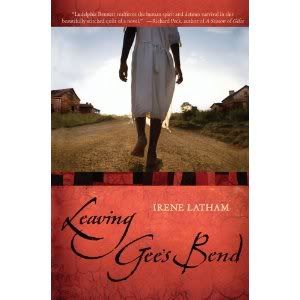
As part of my commitment to combat whitewashing covers, I like to make sure I highlight well-done covers featuring people of color, and Leaving Gee's Bend qualifies:


If it's hard to see in your browser, the girl walking away from us is clearly a girl with dark skin. Penguin (the publisher) also gets points from me for putting her in a dress similar to the one that Ludephia describes herself wearing - shapeless sackcloth. She also goes through the entire book without shoes! I also really like the font used for the title.

Latham has put together quite the adventure story. Physically Ludelphia never travels that far from home, but the predominantly-white city of Camden might as well be a foreign country to her. Latham does an excellent job of bringing 1930s Alabama to life, describing the two very different cities filled with distinct characters. I highly recommend this one, not only as a great story, but as a book that fulfill's Ari's call for historical fiction about African-Americans that isn't either about Civil War-era slavery or the civil rights movement of the 60s.

Thursday, April 22, 2010

Review: How Beautiful the Ordinary ed. by Michael Cart

Found via: 2010 Lambda Literary Award Finalist

The subtitle on this should really be "Twelve stories of sex." I really don't want to think of myself as a prude, but there are a lot of teenagers/young adults getting it on in this book - including a poem that wouldn't be out of place in an erotica collection. If ever there was a book that seemed intent on catching the attention of the book-banners, this is it.

I'll admit, that I was a bit put off from this book from page 2, during the introduction, before the stories has even started. As I tweeted on Tuesday, the introduction refers only (and repeatedly) to "gay, lesbian and transgender" folks. As someone who identifies under the "B" in the LGBT acronym, the forgotten bisexual reference really stuck out for me. Now it's totally possible that no stories featuring bisexual characters were submitted (though there are two stories that feature men sleeping with and/or marrying women as well as sleeping with men), but I wish that had been acknowledged in the introduction. I don't want to play oppression Olympics, but I'd bet that bisexual characters are almost as invisible as transgender characters.

So I was already spoiling for a fight with this collection. I was ready to relax after reading the first story and title piece by David Levithan. It's haunting and beautiful, addressed directly to the reader from the general collective of gay people from the past. From there the quality was rather uneven. Stories about gay men outnumber the stories about lesbians which outnumber the stories about transgendered teens. I gradually lost interest as the book went on until I about quit halfway through Gregory Maguire's incredibly long concluding story. I actually like the plot of that one, but it just dragged on for way too long, which isn't a way I'd describe Maguire's other work.

The other 2010 Lambda Literary Award finalists for YA lit are:
Ash by Malinda Lo
In Mike We Trust by PE Ryan
Sprout by Dale Peck
The Vast Fields of Ordinary by Nick Burd

I've read (and linked to my reviews) Ash and Vast Fields of Ordinary, so of the three that I've read so far, I'm rooting for Ash to take the award. I'm waiting for Sprout from the library, but they don't have In Mike We Trust yet, so I don't think I'm going to be able to read all of the nominees before the May 1st award ceremony. What I don't understand is how something as uneven and unsatisfactory as this collection can be nominated while great, groundbreaking books like Almost Perfect and Rage are totally ignored.

If you're a fan of David Leviathan, I can definitely recommend picking up this book from the library to read his short story. If you are looking for more transgender representation in YA lit, the stories in here are good. There are also at least three stories featuring people of color: one about a transgender young man who is half black, half white, another about a gay Thai man and the protagonist of Maguire's concluding story is Iranian-American. If you want some lesbian poetry that is sure to be dogeared and passed illicitly among tittering friends at the lunch table, then this would be worth a look as well. Otherwise, pass.

Monday, April 12, 2010

Review: Hoppergrass by Chris Carlton Brown

Found via: BBYA 2010 nominee

I added this to my to-be-read list before the final BBYA list was announced in January. It didn't make the final cut, which I'm pretty sure I agree with.

It's 1969 and Bowser has been sent to the Hill, a Virginia juvenile detention center. While the Hill is ostensibly integrated, the boys incarcerated there strictly adhere to racial divisions; while they might work together as assigned, black boys and white boys don't mix otherwise.

Until Bowser and Nose, one of the leaders of the African American boys, have a face off in the bathroom. To the rest of the Hill, Bowser and Nose act like enemies; privately the two become close friends, sharing stories of how they ended up on the Hill.

Until a white boy, Evan, is killed in an accident while on work duty. Shorty Nub, a sadistic and racist supervisor who has already attempted to beat Nose to a pulp once before, tries to blame Nose for the accident, calling it nothing short of murder. Bowser knows Nose, and doesn't trust Shorty Nub, and becomes obsessed with unveiling just how truly sadistic Shorty Nub is while exonerating his friend.

There's some great things about this book, but it reads as a very shallow story. While there are important and serious themes of friendship and racism, the story never digs very deep into them. The imagery is shallow (like the recurring hoppergrass - grasshoppers that Nose temporarily keeps in glass jars) and feels like it was just stuck on in an attempt to make the story a little deeper.

I did really like Bowser's character - it's absolutely impossible to tell whether he's playing the system or if he really is mentally unstable. We do know when he is telling the truth or not about events that happened, but then he'll do something like eat handfuls of paper and cigarettes. Is he crazy, or just trying to make everyone think he's crazy? Should he be held in a psychiatric hospital or is he fit to rejoin society at the end of his sentence? I really enjoyed that unstable element about him.

Bowser and Nose are about the only fully fleshed out characters in the story. Some of the other boys on Hill are interesting, but then the adults are once again quite shallow. They are all either evil or saints. Mr. Woodrow, one of the saints, is the closest to a well-rounded adult character. Miss Lovitt, the librarian that Bowser works with, is just about the only other decent character in the story, but seems to function as little other than a plot device. The not-so-good characters just get one evil trait after another piled on top of them, as if the author thought we wouldn't really believe they were bad guys unless they were some of the evilest people on the planet.

Monday, February 15, 2010

Review: Mare's War by Tanita S. Davis

Winner: 2010 Coretta Scott King Author Honor

This one managed to stay under my radar for awhile. I have no excuses - if it's been under yours as well, consider this your wake up call to get a copy for yourself ASAP!

Octavia and her older sister Tali are under strict orders from their parents to look after their grandmother, Mare, as she takes them on a road trip from California to a family reunion in Alabama. Neither sister is very enthusiastic - Mare isn't your ordinary grandmother, from her name to her long painted finger nails, to driving like a maniac. She's an embarrassment more than anything else.

But the long drive leaves plenty of opportunities to talk (and talking is something Mare loves to do). She regales her granddaughters with stories from her long life, from working as a maid and helping raise her sister in Alabama...to joining the Women's Army Corp in World War II! Mare was a member of the 6888 Central Postal Directory Battalion, the only all-female, all-African-American battalion to serve in WWII. Mare tells of the extensive training she underwent, the harrowing journey across the Atlantic to England, and serving her tour of duty overseas, where attitudes towards blacks were far, far different from in the US.

I think if this had strictly been Mare's story, we'd be hearing this talked about in the same breath as Flygirl - two very different stories of African-American women in WWII, but similar in some respects. However, Mare's War feels a bit didactic at times; after any major revelation in Mare's story we need to cut back to Tali and Octavia reacting in horror that people were ever so uninformed. There are reaction chapters for everything from the implied abuse Mare and her sister suffered from their mother's boyfriends to racism in Europe to the revelation of a lesbian friend. While I appreciated the inclusion of these details in Mare's narrative, I felt like we were being hit over the head with the message that people in the past were Wrong (which they totally were, but did we need that message repeated with every injustice Mare faced?).

I absolutely loved Mare, both as a young woman and as a grandmother. I would have loved to have her as a grandmother when I was growing up. Well, I probably wouldn't have liked being dragged on a road trip, but other than that I thought she was just awesome. It's because of her characterization that I'm including this book in my list of books read for the Women Unbound reading challenge. Defining fiction books that fit into the challenge is a little trickier than non-fiction, but as this is a look at an important and interesting aspect of women's (and African-American) history, I feel it counts. Plus, an individual woman doesn't get more unbound than Mare!

Cover comments: Not one, not two, but three African American women on this cover!

At the book jacket literary cafe, the art director from Simon & Schuster mentioned that they'll often go with illustrated covers for books that are intended more for academic markets - books that fit in well with various bits of curriculum. The cover, combined with the occasional heavy-handedness on the Messages in the text, makes me think there was probably a big push to get this into classrooms and libraries.

Women Unbound Challenge
Related Posts with Thumbnails